
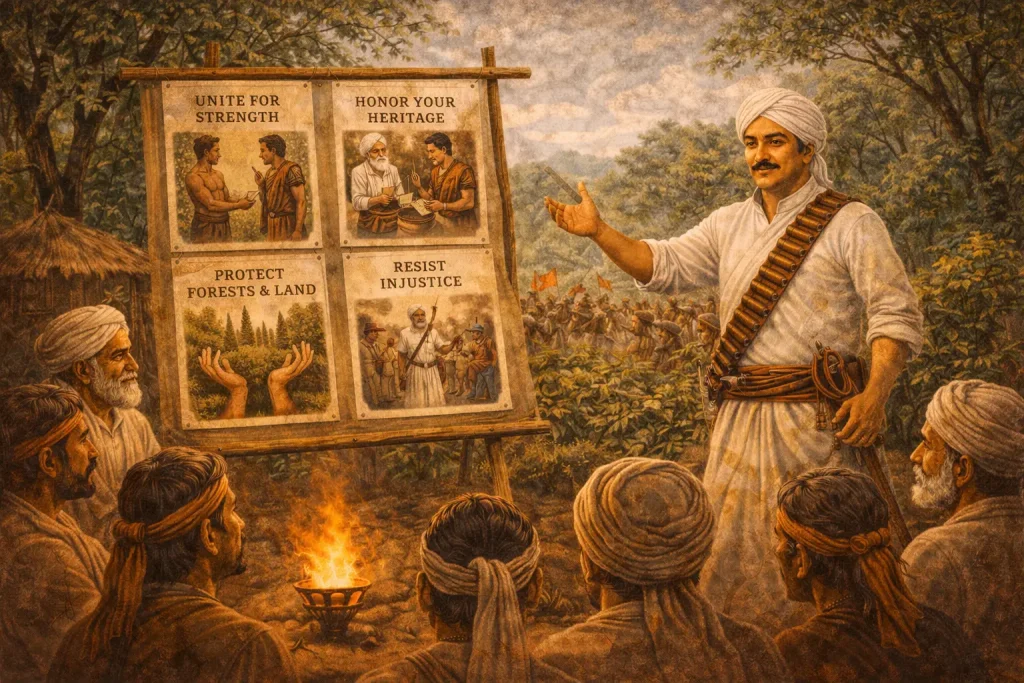

The Tribal Resistance Movement

A United Struggle Against Colonial Oppression

What Was the Movement?

The tribal resistance movement was a coordinated response to British colonial expansion and exploitation. It represented indigenous communities' determination to defend their territories, autonomy, and cultural identity against external domination. Unlike isolated uprisings, this movement sought to transcend traditional tribal boundaries and create unified action toward common liberation. Mundal Singh emerged as a central figure in this historic transformation—bridging communities that had maintained independence for centuries. The movement combined multiple strategies: political negotiation with colonial authorities, economic resistance through boycotts and refusal of unfair terms, military action to defend territory, and cultural preservation efforts to maintain tribal identity and knowledge systems.

Growing up in this environment, young Mundal was shaped by the values of his ancestors: courage, community solidarity, and deep reverence for the land. His family held respected positions within the tribal hierarchy, and he was groomed from childhood to be a leader and protector of his community.

The forests of Central India were not merely living spaces but sacred grounds—sources of sustenance, spiritual meaning, and identity. Colonial attempts to control and exploit these forests became Mundal's first window into understanding the injustice plaguing his people.

A Movement of Many Communities

Mundal Singh was born into a vibrant tribal community in Central India, rich with ancestral knowledge and deep connection to the forest. His early years were shaped by traditional practices, warrior training, and the values of his people.

Growing up in the mid-19th century, Mundal Singh witnessed firsthand the encroachment of British colonial power into tribal territories. He learned from tribal elders the history of his people, the importance of community solidarity, and the responsibility of leaders to protect their land and heritage.

Core Objectives

Protection of Land & Forests

Defend indigenous territories from colonial seizure and ensure sustainable stewardship of sacred forests and natural resources.

Resistance to Exploitation

End unfair taxation, forced labor, and economic exploitation of tribal communities by colonial authorities.

Preservation of Tribal Governance

Maintain indigenous decision-making structures and cultural autonomy against imperial imposition of foreign systems.

Inter-Tribal Unity

Build solidarity among diverse tribal communities to create unified resistance against common colonial threats.

Impact & Legacy

Immediate Impact

The organized resistance succeeded in securing temporary territorial control, establishing areas where tribal communities could maintain traditional governance and protection from direct colonial exploitation.

Broader Influence

The movement influenced other indigenous uprisings across India and demonstrated the viability of inter-tribal cooperation, providing a model for future collective action among diverse communities.

Lasting Inspiration

The tribal resistance movement remains a cornerstone of indigenous consciousness and continues to inspire contemporary movements for land rights, environmental protection, and tribal self-determination.

Mundal Singh's Central Role

Organization & Strategy

Designed and implemented coordinated resistance campaigns that combined political negotiation with strategic military action.

Community Mobilization

Traveled extensively to unite traditionally separate tribal groups, building networks of trust and collective purpose.

Direct Action Leadership

Led local campaigns against colonial encroachment, protected vulnerable communities, and established secure tribal zones.

Cultural Preservation

Strengthened tribal identity and pride while actively resisting colonial cultural assimilation efforts.

Scroll to Top